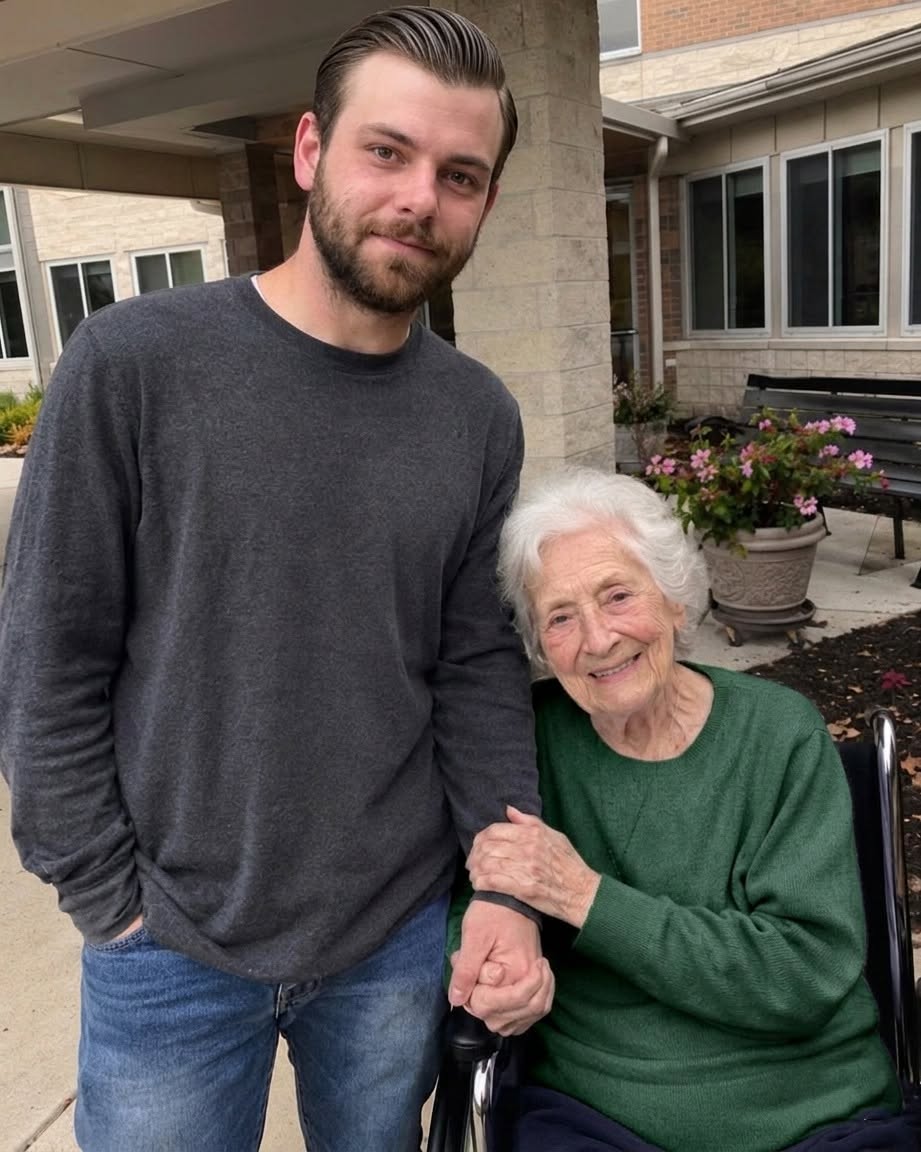
I Pretended to Be an Elderly Woman’s Son at the Nursing Home Because Her Real Family Paid Me – After She Passed Away, the Director Said, ‘She Left One Last Request for You’
“Just weekends. Bring her flowers if you want. Sit there for an hour. Smile. Leave.”
My hand moved before my conscience could stop it. I drew the cash toward myself and felt its weight settle into my palm like a small, heavy rock.
“When do I start?”
He almost smiled. For one second, he seemed like a man relieved to place his burden onto someone else’s shoulders.
“Saturday. And Jeremy. Don’t get attached.”
I nodded, already aware that I had agreed to become somebody I was not.
The corridor of the nursing home smelled like disinfectant and faded roses. My hands were clammy as I repeated the name Tim had drilled into me on the phone the previous night.
Room 214. I knocked once, opened the door, and walked in.
Rosie was sitting beside the window with a thin blanket folded over her knees. She lifted her head slowly, blinking against the afternoon brightness.
“Mama,” I said, the word feeling unfamiliar on my tongue. “It’s me. Tim.”
For a long while, she only searched my face. Then her entire expression softened, and she lifted a shaking hand toward me.
“There you are!” she whispered.
I crossed the room and held her hands. I had expected myself to feel smart and distant. Instead, shame rose hot in my throat.
“Sit, sit,” Rosie said, tapping the chair beside her. “Have you eaten? You look tired.”
“I’m okay, Mama.”
“Are you sleeping enough, Timmy? You always pushed yourself too hard.”
No one had asked me those questions in years. Not after my father walked out. Not after my mother became ill.
I stayed there for an hour, mostly letting her talk. Rosie spoke about a garden I had never stepped into and a dog I had never had, and I nodded as though those memories belonged to me.
When I got up to leave, she tightened her fingers around my hand.
“Come back soon.”
“I will, Mama.”
As I turned toward the door, I looked back and saw tears glistening in her eyes. She quickly turned away and wiped them with the edge of her blanket.
On my second visit, I carried tulips. On the third, I brought a little box of caramel chocolates the nurse told me Rosie enjoyed. By the fourth visit, I arrived on a Wednesday, even though Tim had not paid for that day.
In the hallway, I ran into Margaret, a delicate woman with sharp eyes and a cardigan far too large for her frame. She watched me walk past her door with flowers in my hand.
“You visit her a lot,” she said.
“She’s my mother.”
Margaret angled her head. “She’s the sweetest soul here. You’re lucky.”
The way she said it made me glance away.
Tim phoned that Friday. His voice was tight.
“You don’t need to go midweek, Jeremy. This is just a job. Keep it simple.”
“She gets lonely.”
“She has dementia. She forgets the second you leave.”
I clenched the phone harder. “Maybe. But she remembers while I’m there.”
He ended the call.
Weeks faded into months. I began skipping lunch so I could drive across town. I read Rosie the newspaper. I massaged her hands when her knuckles hurt.
One afternoon, she leaned closer, breathing lightly, her eyes clearer than I had ever seen them.