
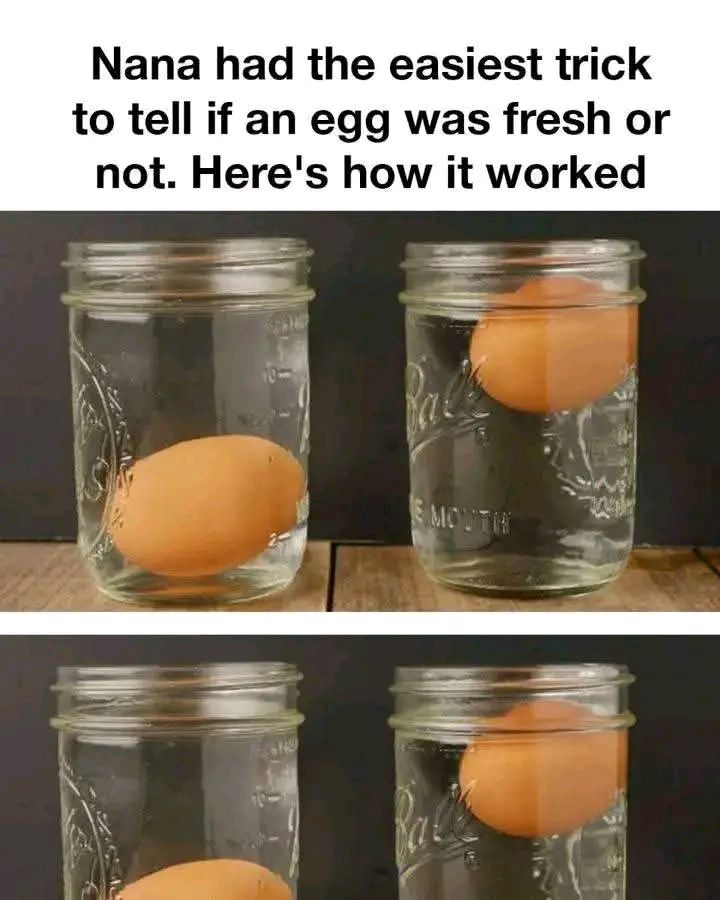
Why This Test Works
Eggshells are porous, allowing air and moisture to move in and out over time. As moisture evaporates and air enters, the air pocket grows—changing the egg’s buoyancy. A floating egg isn’t necessarily spoiled, but it’s past its prime, and consuming it carries more risk.
Other methods exist, like candling, crack-and-sniff, or the yolk-and-white test, but these often require experience or tools. Nana’s water method works for anyone, instantly, with no gadgets required.
Egg Freshness Myths—Busted
- “Cloudy whites mean the egg is bad.” False! Cloudiness actually indicates freshness.
- “A blood spot means it’s rotten.” False. Blood spots are natural and safe.
- “Cracked eggs must always be thrown away.” Not necessarily. If refrigerated and used quickly, they can be safe—but caution is advised.
Understanding these facts helps reduce waste and boosts kitchen confidence.
FAQs About Egg Storage
1. How long do eggs last in the fridge?
3–5 weeks when properly refrigerated.
2. Can I eat eggs past the expiry date?
Yes—if they pass the float test. Expiry dates are often conservative.
3. Should I wash eggs before storing them?
No. Washing removes the protective coating. Only wash right before use.
4. Can I freeze eggs?
Yes—but not in the shell. Crack them and store in an airtight container or ice cube tray.
Final Thoughts: Trust Nana’s Timeless Wisdom
Nana’s water test isn’t just a quirky tip—it’s a proven, practical way to ensure your eggs are fresh. In a world of digital apps and barcodes, sometimes the simplest techniques are the most reliable.
Whether you’re whipping up breakfast, baking a cake, or making homemade pasta, knowing your eggs are fresh gives you confidence and peace of mind.
So next time you’re unsure about that carton in the fridge, grab a bowl of water and let Nana’s wisdom guide you—because some tricks never go out of style.
