
5. Slice It Open
If you’re unsure, cut it open.
Naturally ripened tomatoes typically have:
- A rich red interior
- Well-developed seeds
- Plenty of juice
Artificially ripened tomatoes may appear:
- Pale inside
- Less juicy
- Slightly underdeveloped in the seed cavities
The inside often tells the real story.
6. Consider the Nutritional Value
Tomatoes develop many of their vitamins and antioxidants during the gradual ripening process.
Naturally ripened tomatoes tend to contain higher levels of beneficial compounds because they matured fully on the plant. Artificial ripening may not allow the same depth of nutrient development.
7. Think About Shelf Life
Naturally ripened tomatoes:
- Softer
- Juicier
- Shorter shelf life
Artificially ripened tomatoes:
- Firmer
- Longer-lasting
- Easier to transport
Longer shelf life often comes at the expense of flavor and texture.
8. Environmental & Ethical Considerations
Choosing naturally ripened tomatoes often supports more traditional farming methods that focus on quality over speed. Reducing reliance on chemical ripening agents can also benefit environmental sustainability.
When you choose vine-ripened produce, you’re often supporting better agricultural practices.
Final Thoughts
At first glance, all red tomatoes may look the same — but small details make a big difference.
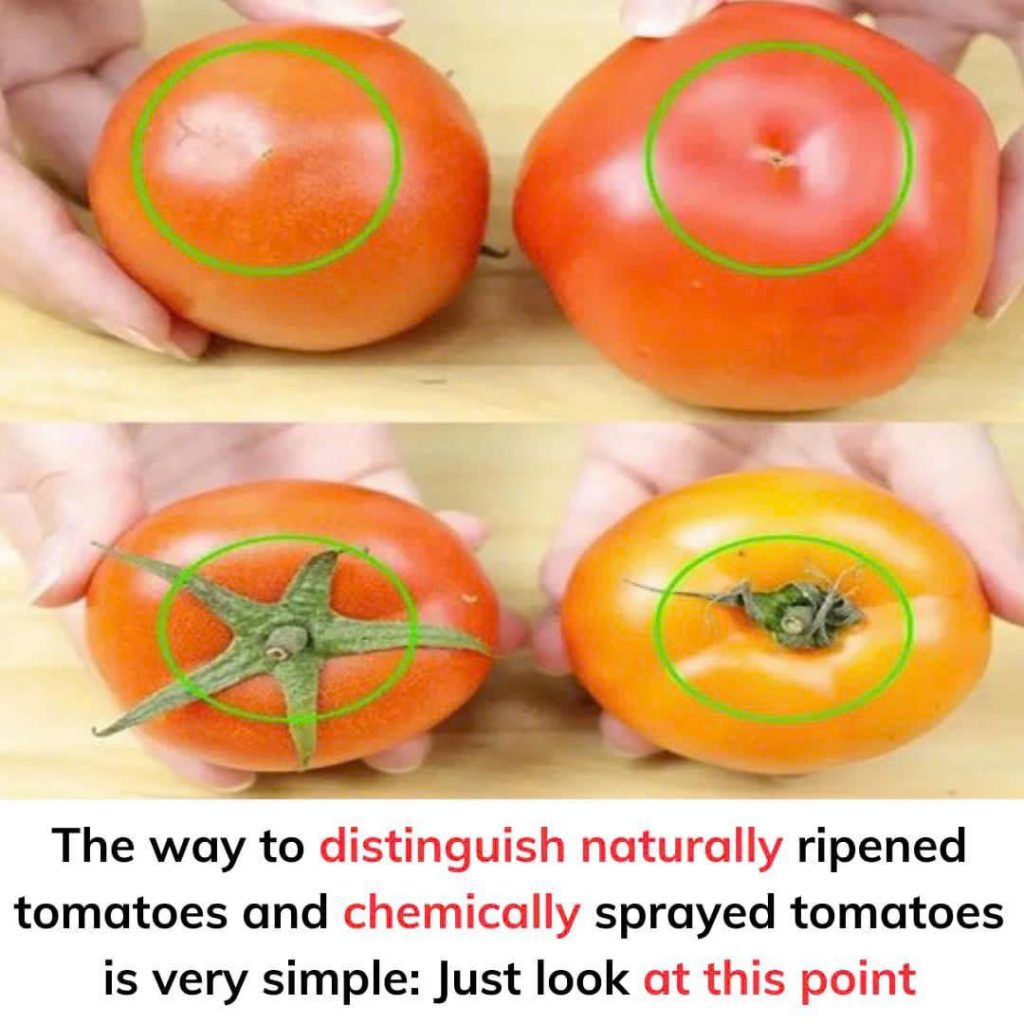
By checking color, texture, aroma, stem condition, and internal appearance, you can better identify naturally ripened tomatoes. While artificially ripened ones may last longer and cost less, they often fall short in flavor, texture, and nutritional value.
Next time you’re at the market, take a closer look — your taste buds will thank you.
