
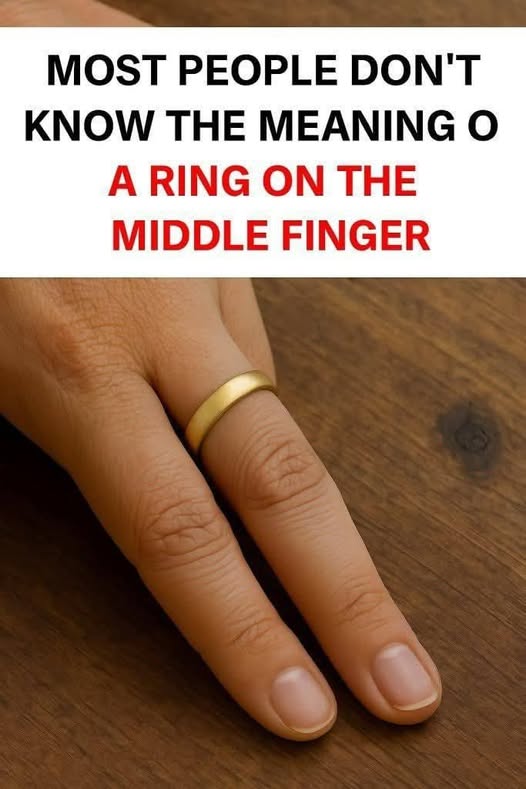
What Wearing a Ring on the Middle Finger Really Means
Jewelry is more than decoration—it often communicates identity, personality, or intent. Among all the fingers, the middle finger holds a unique place. Unlike the ring finger, which carries strong traditional associations with marriage, the middle finger has no single universal meaning. Instead, its symbolism shifts depending on culture, fashion, and personal choice.
Because the middle finger sits at the center of the hand and is typically the longest, a ring placed there naturally draws attention. This central position gives it an air of balance, confidence, and individuality, setting it apart from other finger-ring traditions.
Symbolism: Balance, Responsibility, and Self-Identity
One of the most commonly cited interpretations of a middle-finger ring is equilibrium and self-authority. Positioned between the index finger—often associated with leadership—and the ring finger—linked to commitment—the middle finger symbolically represents personal direction and inner stability.
In modern interpretations, wearing a ring on this finger is often associated with:
- Balance and stability, reflecting its central placement
- Responsibility and maturity, suggesting self-control and accountability
- Individual identity, emphasizing confidence over tradition
Because this finger isn’t tied to relationship status, rings worn here tend to say more about who someone is than what stage of life they’re in.
Fashion and Personal Expression
In contemporary style culture, the middle finger is frequently chosen for fashion-first reasons. Its length and prominence make it ideal for statement rings, bold bands, and eye-catching designs.
Many people select this finger because it:
- Highlights decorative or oversized jewelry
- Enhances an outfit’s overall aesthetic
- Draws attention to manicures or nail art
- Complements stacked or asymmetrical ring styles
As a result, the middle finger has evolved from a neutral choice into a deliberate style statement.
Cultural Variations in Meaning
The meaning of a middle-finger ring can vary significantly across cultures:
- Western cultures often associate it with confidence, independence, and self-expression rather than romance
- Some Eastern traditions link fingers to energy systems or astrology, where the middle finger may symbolize discipline or inner balance
- Spiritual or protective interpretations exist in certain regions, though these beliefs are not universal
Because interpretations differ so widely, assuming a single global meaning can easily lead to misunderstanding.
Rings as Symbols of Identity
In some communities, specific ring styles worn on the middle finger carry more defined meanings. For example:
- A black ring on the right middle finger is recognized within LGBTQ+ communities—particularly among asexual individuals—as a subtle symbol of identity and pride
This kind of coded symbolism highlights how jewelry can function as a quiet form of self-expression and community connection, beyond simple aesthetics.
Common Misconceptions
A few myths are worth clearing up:
- A ring on the middle finger does not universally signal anger or defiance—the association comes from the gesture, not the jewelry
- There is no single “correct” interpretation; personal intention matters greatly
- Modern meaning often blends tradition, fashion, and individual choice
In many cases, what a ring represents is defined more by the wearer than by historical rules.
Final Takeaway: Style, Meaning, and Freedom
Wearing a ring on the middle finger today represents a blend of balance, self-identity, confidence, and bold personal style. It can be purely decorative, quietly symbolic, or deeply meaningful—depending on the person wearing it.
Because it carries no rigid traditional role, the middle finger offers something rare in jewelry symbolism: the freedom to define your own meaning.
